
Reviewed · LJUBLJANA TOURS
Ljubljana private walking tour with a local
Ljubljana’s best introduction comes on foot, and this private tour puts the city’s major sights into one tidy two-hour route. You’ll move from the old market to the Ljubljanica River, then across bridges and squares shaped by architect Joze Plecnik. I especially like the look at everyday Slovenian life in the food market and the way the guide connects architecture with folklore, politics, and local customs.
I also like the private format. You can ask questions, change the pace, and steer the conversation toward food, art, history, or daily life. Guides named in guest feedback include Peter and Milos, and Peter is noted for adjusting start times, meeting people at their old-town lodging, and offering useful suggestions for places to eat and visit afterward. The main consideration is that this is a fast overview, not a museum tour, and cathedral admission is not included.
Key points to know before booking
- A private two-hour route: Only your group takes part, so the walk can be adjusted to your pace and interests.
- A strong first-day introduction: The route covers the market, cathedral, main squares, riverfront, and Ljubljana’s famous bridges.
- Plecnik is the connecting thread: His Triple Bridge, Shoemaker’s Bridge, and National and University Library receive special attention.
- Local stories add flavor: Expect explanations of Slovenian folklore, Preseren’s love story, medieval punishments, and the dragon symbol.
- The market is more than a photo stop: You’ll see Slovenian produce, homemade goods, flowers, and a milk machine.
- Good value for a small group: At $78.64 per person, the price makes the most sense when several people share a private guide.
Why this private walk works well in Ljubljana
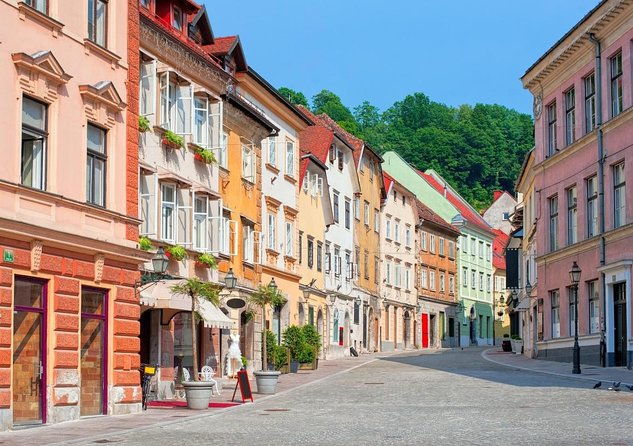
Ljubljana is compact, easy to walk, and full of details that are easy to miss. A dragon on a bridge, a doorway carved with national history, a church facade borrowed from Rome, and a square named for a political gathering all make more sense when someone explains the connections.
This tour is built for that purpose. You are not simply ticking off landmarks. You are crossing the old town with a local guide who can explain how the city developed, how Slovenia fits into European history, and what people eat, study, celebrate, and argue about today.
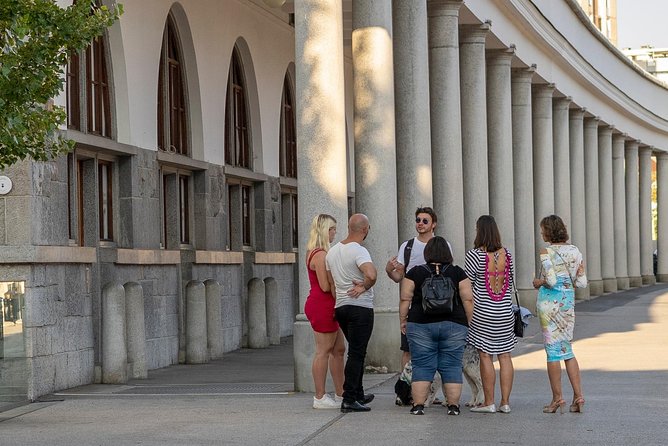
The private setting matters. If you are tired after a flight, traveling with children, or moving at a slower pace, you do not have to keep up with a large group. If you are fascinated by architecture, you can spend more time with Plecnik. If food interests you most, you can ask about the market and local products.
The route is also efficient. In roughly two hours, you see a large share of central Ljubljana without needing a bus or taxi. Several stops are brief, often five or ten minutes, so the walk keeps moving. That is useful on a short stay, but it also means you should not expect long indoor visits.
More Walking Tours in Ljubljana
- Ljubljana: Guided Walk & Funicular Ride to Ljubljana Castle
★ 4.6 · 576 reviews - Ljubljana: Slovenian Cuisine Walking Tour with Tastings
★ 4.8 · 472 reviews - Ljubljana: 2h walking tour with local guide
★ 4.7 · 433 reviews
Starting at the Central Market
The walk begins near the Mouse Fountain in central Ljubljana and heads into the old town. The first major stop is the Central Market, which has operated on the same spot for about 120 years.
This is one of the most useful parts of the tour because it gives you a glimpse of Slovenia beyond polished squares and pretty river views. You can see fruit, vegetables, bread, meat, dairy products, oils, juices, flowers, and homemade goods brought in from different parts of the country. Much of the produce is described as ecological, and the guide explains what you are seeing rather than leaving you to guess.
The milk machine is a particularly memorable detail. It is the kind of small, practical curiosity that makes a place feel real. You may not spend long here, with about ten minutes scheduled, but you can use the stop to ask what foods are typical, how the market works, and where to look for local products later.
St Nicholas Cathedral and the city’s religious story
The Cathedral of St Nicholas is the next major stop. The guide discusses its history and points out two notable sculpted doors: the Slovenian Door and the Ljubljana Door.
These doors are useful visual history lessons. They represent Christianity in Slovenia and give the cathedral a direct link to the country’s past. You do not need a long lecture to appreciate them, since the sculpture itself carries much of the story.
Admission is not included, so treat this as an exterior and explanatory visit unless you choose to go inside separately. The stop lasts about ten minutes. If entering the cathedral matters to you, ask the guide about the practical details at the start of the walk.
Baroque water and the old Town Hall
At the Fountain of Three Carniolan Rivers, you pause to look at one of Ljubljana’s Baroque landmarks. The fountain represents three rivers connected with the historic Carniola region, and the guide explains both its artistic design and its place in the city’s past.
You then see the Town Hall, known as the Magistrat. It dates from the late 15th century, and Ljubljana’s mayors have governed from this building since that period. The visit is mainly from outside, though part of the building can be seen from inside.
This is a good example of how the tour handles Ljubljana. You get a landmark, a date, and a reason it matters, but also a sense of how the city’s government has continued to use the same civic center for centuries. The stop takes about ten minutes and costs nothing.
Same short drive, a completely different day out:
- Ljubljana: Postojna Cave & Predjama Castle Tickets and Tour
★ 4.9 · 2,146 reviews - From Ljubljana: Trip to Lake Bled and Bled Castle
★ 4.7 · 1,426 reviews - Slovenia in One Day: Lake Bled, Postojna Cave and Predjama Castle
★ 5.0 · 879 reviews - Ljubljana: Castle Entry Ticket with Optional Funicular Ride
★ 4.3 · 718 reviews
Shoemaker’s Bridge and the Ljubljanica River
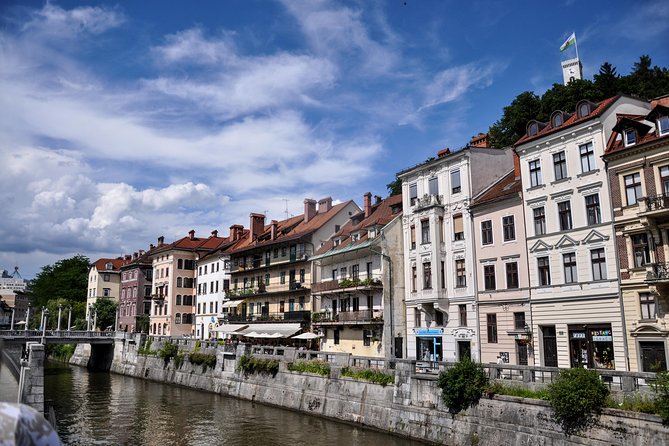
Shoemaker’s Bridge, or Cevljarski Most, is one of the tour’s most interesting architecture stops. It was designed by Joze Plecnik, the architect who gave much of central Ljubljana its distinctive look.
Here, the guide connects the bridge to medieval law and punishment. Butchers and bakers accused of cheating customers were reportedly dipped into the river. It is an odd and memorable story, and it helps explain why the Ljubljanica was once more than a scenic waterway.
You also hear how the river served the city in the past and how it functions today. That context is worth having because the Ljubljanica can look like a decorative ribbon through the old town. It was also a working part of urban life.
The bridge itself is free to visit, and the stop takes around ten minutes. If you like city design, ask the guide to point out Plecnik’s repeating patterns and symbols. If you prefer folklore, this is one of the places where the stranger stories take center stage.
Plecnik’s National and University Library
The National and University Library receives a short stop, about five minutes, but it may be one of the most rewarding buildings for architecture fans. The guide describes it as Plecnik’s biggest homework and explains the symbolism built into its design.
The library is often treated as a grand facade, but the point here is to look more closely at the ideas behind it. Plecnik used architecture to suggest a passage toward learning, and the building has the feel of a temple dedicated to study.
You will not tour the interior as part of the stated route, so the value lies in the explanation and the exterior details. This is another reason to keep your expectations realistic: the walk is about seeing and understanding the city, not entering every building.
French Revolution Square and three layers of history
French Revolution Square brings together three different stories. The guide discusses the Teutonic Knights and their monastery, Napoleon’s wars and the Illyrian Provinces, and Plecnik’s work as an architect.
That combination gives you a quick lesson in how Ljubljana has been shaped by outside powers as well as local ideas. Slovenia’s past is not a straight line, and the square helps introduce the political changes that affected the city.
The ten-minute stop should suit you if you enjoy connections between European history and visible places. If you want a long account of the Napoleonic period, this walk will only provide an outline. You can ask questions and go deeper, but the route has several more landmarks ahead.
Congress Square and the view toward Ljubljana Castle
Congress Square, or Kongresni trg, is one of the broadest public spaces on the route. You see Star Park, the Ursuline Church, the Slovenian Philharmonic Orchestra building, the University of Ljubljana, and other important buildings.
The Philharmonic is described as one of Europe’s oldest institutions of its kind. The guide also explains why the square has its name, giving the open space a political and cultural background rather than treating it as just a pleasant place to sit.
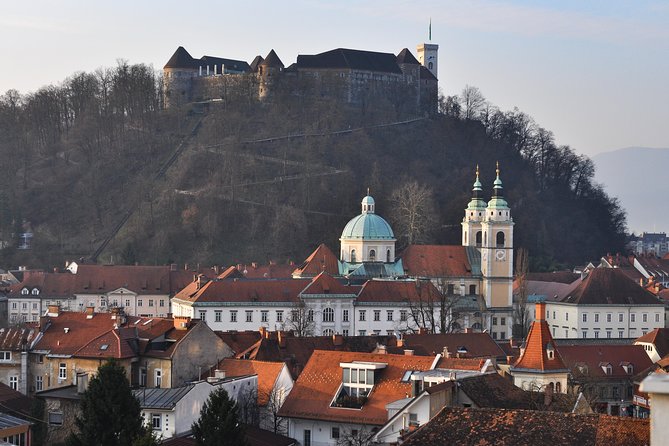
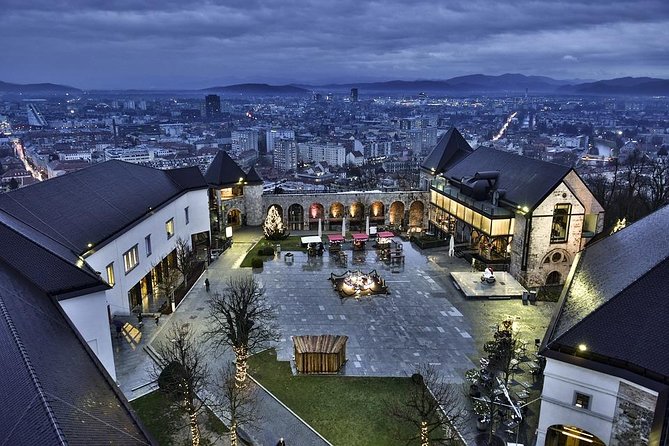
From Congress Square, you get a view of Ljubljana Castle. The guide explains the castle’s history and the different purposes it has served since it was built at the end of the 15th century. This is a view-only introduction, not a castle visit, so plan a separate trip if you want to explore the fortress itself.
I like this pause because it lets you look outward. Much of the tour takes place among close-set streets and buildings. Here, you can see how the castle relates to the city below.
Preseren Square, poetry, and the Triple Bridge
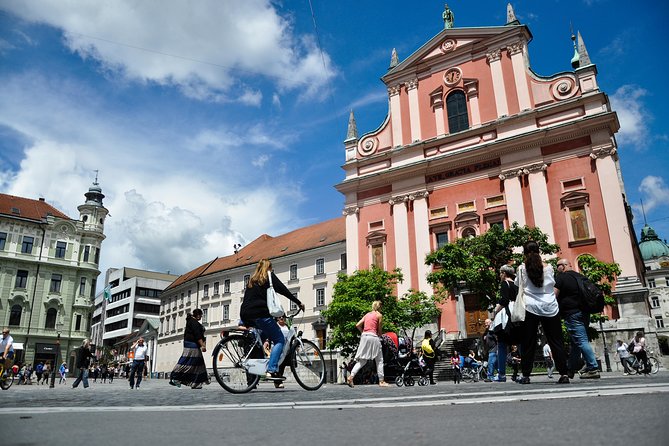
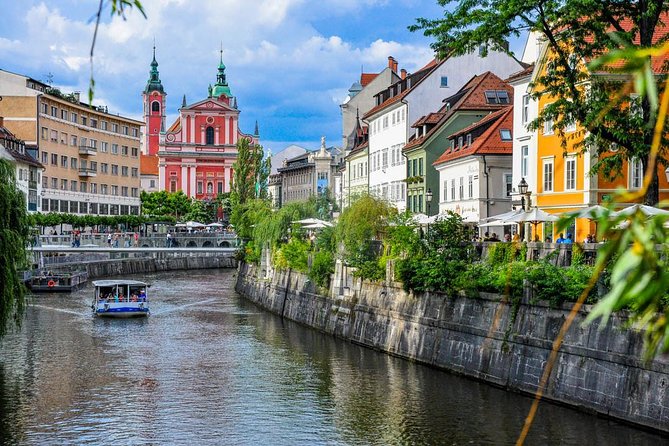
Preseren Square is Ljubljana’s postcard scene. From here, you see the Triple Bridge, the pink Franciscan Church, Art Nouveau buildings, and the statue of France Preseren, Slovenia’s best-known poet.
The guide explains Preseren’s importance to Slovenian literature and tells the story of his unreturned love. That personal detail makes the square easier to remember. You are not only seeing a statue of a national figure. You are hearing why this particular poet matters and how his work fits Slovenian identity.
The Triple Bridge is one of Plecnik’s most famous works. The guide explains its original purpose, later design, and symbolism, including the basic question many people ask first: why are there three bridges?
The answer is easier to understand when you see how the crossing links the square, the river, and the old town. The bridge is free to visit and receives about five minutes on the route, though you will also see it from Preseren Square.
The Franciscan Church gets a very short stop of about three minutes. Its pink Baroque facade recalls Il Gesu in Rome, giving you a quick comparison between Ljubljana and the wider Catholic architectural tradition.
Butcher’s Bridge and Dragon Bridge
Butcher’s Bridge is a newer bridge, despite its old-sounding name. The guide explains why it received that name and points out the grotesque statues. Today, many people know it as the Love Bridge because of the locks attached to its railings.
The contrast is part of the fun. A bridge linked to butchery and unsettling sculpture has become a popular place for romantic gestures. You can ask about the artwork, the bridge’s age, and how its modern identity differs from its official name.
The route finishes its sightseeing sequence at Dragon Bridge, one of Ljubljana’s most recognizable landmarks. It is an Art Nouveau masterpiece, and its dragons are not random decoration. The guide explains why the dragon became the city’s symbol.
This is a satisfying final stop because the image is so clear. By this point, you have seen Baroque work, medieval stories, Plecnik’s designs, Art Nouveau buildings, religious art, and modern city life. The dragon pulls those threads into one memorable Ljubljana image.
The listed ending point is Prešeren Square, even though Dragon Bridge is the final sightseeing stop described. Confirm the exact end arrangement with the guide so you know where the walking portion officially wraps up.
What the two-hour pace feels like
The route includes about thirteen named stops, with many pauses lasting five or ten minutes. Walking time connects them, so the experience is active and fairly brisk.
You should wear comfortable shoes and expect to remain outdoors for most of the tour. The route has been handled in rain, cold, heat, and strong wind, and the guide has adjusted for conditions by seeking shade or helping with practical needs. Still, weather can shape your enjoyment. On a hot day, an early start is sensible. On a wet day, bring protection rather than assuming the guide can supply it.
The private group format also helps with pace. A group with mobility needs has been accommodated, and a jet-lagged couple found the smaller setting useful. That does not mean every access detail is guaranteed, but it does mean you can discuss your pace rather than being tied to a large group schedule.
Service animals are allowed, and the meeting area is near public transportation. Most people can take part, but remember that this remains a walking tour with frequent standing.
Price, guide quality, and overall value
The listed price is $78.64 per person. That is not the cheapest way to see Ljubljana, especially for one person, but it is easier to justify when shared by a family or small group. Group discounts are available, which improves the calculation for several people traveling together.
You are paying for a private English-language guide, route planning, local context, and the ability to ask questions. You are not paying for cathedral entry, a castle visit, food tastings, or transportation. If you want a series of indoor attractions, this is not the right product.
The strongest part of the value is the time saved. In two hours, you cover the market, central churches, the main squares, the river, several bridges, Plecnik’s major work, and the city’s dragon symbol. You also leave with suggestions for food, drinks, shopping, and further places to visit, which can make the rest of your stay easier.
Guide quality can vary by assignment, but Peter and Milos are names associated with this experience. Peter is repeatedly described as friendly, punctual, flexible, and willing to continue a conversation beyond the scheduled time. He has also adjusted meeting times, helped in bad weather, lent an umbrella, and adapted the pace for a family member with mobility issues. One isolated poor experience found the tour too ordinary, so if you want a highly specialized subject tour, state your interests clearly before starting.
Who should book this Ljubljana walk
I would choose this tour for a first visit, especially if you have only a day or two in the city. It gives you a usable mental map and shows where to return for a longer look.
It also suits:
- Couples or families who want a private pace
- Small groups interested in Slovenian history and culture
- Architecture fans curious about Plecnik
- Visitors who want food and cafe suggestions from a local
- People arriving jet-lagged who prefer not to join a large group
- Anyone who likes folklore, unusual stories, and city symbols
I would think twice if you dislike walking, want extensive time inside museums, or prefer a tour built around food sampling. The market is included, but this is not a food tour. The castle is explained from a viewpoint, not explored room by room.
Should you book it?
Book it if you want a clear, personal introduction to Ljubljana rather than a long formal lecture. The route is compact, the private format is useful, and the mix of market life, architecture, poetry, religion, politics, and folklore gives you more than a list of photo stops.
Before the walk, tell the guide what matters most to you. Ask for more Plecnik, more food, more Slovenian history, or a gentler pace. At $78.64 per person, it is best value for two or more people who want a flexible orientation at the start of their stay. If you have limited time and want to understand the city before exploring it on your own, this is a sensible choice.
Free cancellation is available up to 24 hours before the start time. Confirmation is sent within 48 hours, subject to availability.
FAQ
How long is the Ljubljana private walking tour?
The tour lasts approximately two hours.
What language is the tour offered in?
The tour is offered in English.
Is this a private tour?
Yes. Only your group takes part in the activity.
What places are included?
The route includes the Central Market, St Nicholas Cathedral, Robba Fountain, Town Hall, Shoemaker’s Bridge, the National and University Library, French Revolution Square, Congress Square, Preseren Square, Triple Bridge, the Franciscan Church, Butcher’s Bridge, and Dragon Bridge.
Is admission to Ljubljana Cathedral included?
No. Admission to the Cathedral of St Nicholas is not included.
Does the tour include Ljubljana Castle?
The guide explains the castle’s history and points it out from Congress Square, but a castle visit is not included in the stated route.
Where does the tour start?
The meeting point is the Mouse Fountain in Ljubljana’s Center District.
Where does the tour end?
The listed end point is Prešeren trg 1 in Ljubljana. Dragon Bridge is the final sightseeing stop described, so confirm the exact arrangements with the guide.
Can I cancel for a full refund?
Yes. You can cancel at least 24 hours before the start time for a full refund. Cancellations or changes made less than 24 hours before the start time are not accepted for a refund.
Just added around Ljubljana
- Woop! Fun park with 21 attractions★ 4.6 · 3 reviews
- Postojna Cave and Predjama Castle Tour from Ljubljana★ 5.0 · 3 reviews
- Postojna Caves and Predjama Castle. Private trip.★ 4.5 · 3 reviews
- Introduction to the Specialty Coffee world in Ljubljana★ 5.0 · 3 reviews
- Full-day tour of Postojna Cave and Bled Lake From Ljubljana★ 5.0 · 3 reviews
- Ljubljana: Interactive Workshop with Experienced Weaver★ 5.0 · 3 reviews
- Private Zagreb Tour from Ljubljana★ 4.5 · 3 reviews
- The Deadly Walk – Ljubljana Cemetery Tour★ 5.0 · 3 reviews
Ljubljana Tours, compared.
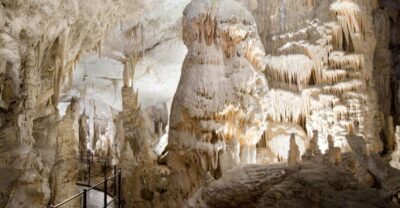
Postojna Cave & Predjama Castle Tickets and Tour
Read our review →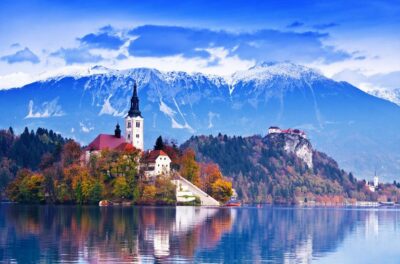
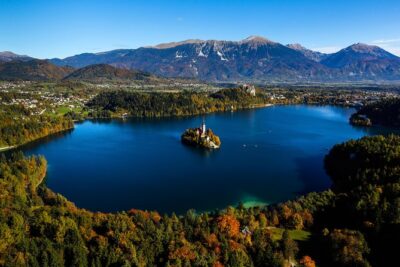
Slovenia in One Day: Lake Bled, Postojna Cave and Predjama Castle
Read our review →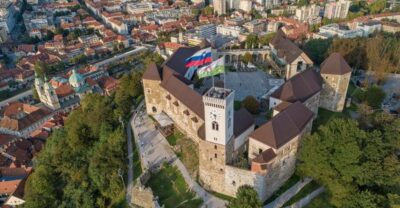
Ljubljana: Castle Entry Ticket with Optional Funicular Ride
Read our review →
Lake Bled and Bohinj Tour with Savica Waterfall
Read our review →
Guided Walk & Funicular Ride to Ljubljana Castle
Read our review →Browse the lists this tour appears in