
Reviewed · LJUBLJANA TOURS
Coffee Sensory Training in Ljubljana
The most interesting part of this Ljubljana workshop is that you learn to assess coffee rather than simply drink it. Over about seven hours, you calibrate your sense of taste, identify aromas, compare coffee profiles, and practice the slurping technique used in professional tasting.
I like the private format, since your group gets the instructor’s attention instead of following a crowded classroom. I also like that the session leads to a CSP Sensory Skills Foundation certificate, giving the day a clear goal beyond a pleasant caffeine break.
The main thing to consider is the amount of coffee. You are encouraged to spit during tasting, but one participant still felt dizzy by the end. Plan to pace yourself, use the water provided, and treat this as sensory training rather than a seven-hour drinking session.
Key points about the Ljubljana coffee workshop
- Professional tasting practice: Learn to judge coffee by taste, aroma, and subtle differences rather than by habit or preference alone.
- A named instructor: Lev leads the session, and the available feedback highlights his strong coffee knowledge and engaging teaching style.
- Theory and practical testing: You sit both a theoretical and practical exam for the CSP Sensory Skills Foundation certificate.
- Private group setting: Only your group takes part, which suits couples, friends, and serious coffee drinkers.
- A full seven-hour schedule: The long format allows time for palate calibration, aroma work, tasting practice, and testing.
- Useful planning detail: Coffee, tea, bottled water, and snacks are included, but lunch is not.
What this seven-hour Ljubljana course is really about
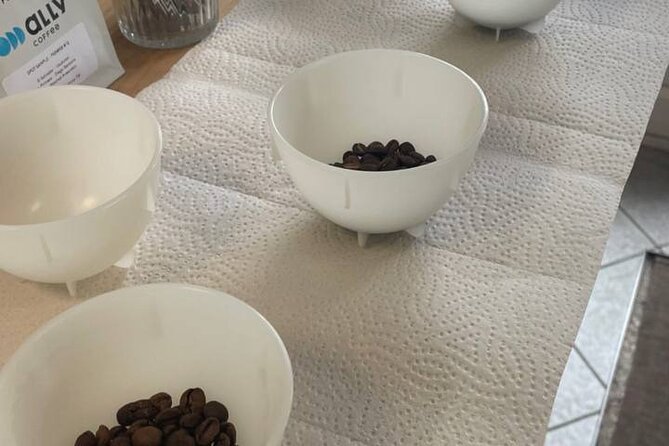
This is not a café crawl or a short demonstration. It is a structured sensory workshop designed to teach you how professionals evaluate coffee.
You begin with your own senses. The course helps you calibrate your perception of basic tastes, which means learning how your palate responds to qualities such as sweetness, acidity, bitterness, and other core sensations. That matters because coffee tasting can sound vague until you have a reliable way to separate one sensation from another.
From there, you work with aroma. Coffee contains many scents, but you may not notice them clearly when you simply drink a cup. The workshop gives you a method for identifying those aromas and connecting them with the coffee in front of you.
You also train to recognize subtle differences in taste and aroma profiles. This is the useful heart of the course. Instead of saying only that you like or dislike a coffee, you begin to describe what you are sensing and why two coffees seem different.
The day ends with both a theory exam and a practical exam. Passing is intended to lead to the internationally recognized Specialty Coffee Certificate, CSP Sensory Skills Foundation. That certificate gives the session more weight than an informal tasting, especially if you work in coffee or want a formal starting point for further study.
A few more Ljubljana half-days to weigh up
- 2-Hour Specialty Coffee tasting in Ljubljana
★ 5.0 · 12 reviews - Introduction to the Specialty Coffee world in Ljubljana
★ 5.0 · 3 reviews
Meeting Lev and getting settled at 10:00 am
The workshop begins at 10:00 am at Dunajska c. 61 in Ljubljana. It is near public transportation, so you can plan to arrive without needing a private car. Since the activity returns to the same meeting point, you do not need to arrange a separate pickup at the end.
The private setup is helpful here. Sensory work requires concentration, and a small group makes it easier to ask questions, compare impressions, and get corrections when your description does not quite match what you are tasting.
Lev is the named instructor for the course. Feedback about his teaching points to an instructor who is passionate about coffee and willing to answer broad questions. That is valuable in a subject where beginners often wonder if they are tasting the right thing or simply imagining a flavor.
You should arrive ready to pay attention. This is a workshop, not a casual morning stop, and the schedule runs for roughly seven hours. Wear something comfortable and leave room in your day for the full session.
Calibrating your palate before tasting coffee
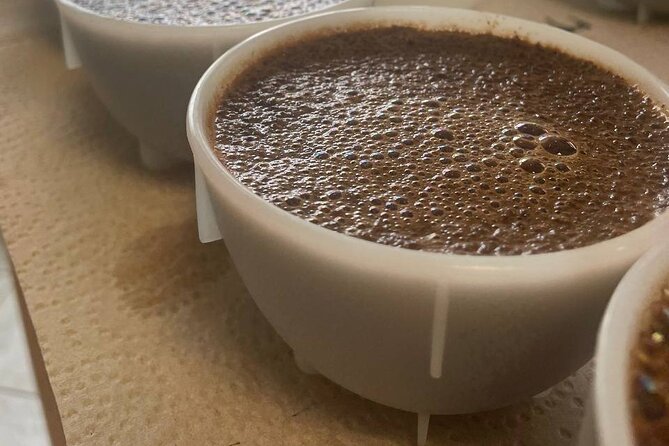
The palate calibration work is one of the best reasons to book this activity. Coffee flavor can be affected by personal habits, expectations, and sensitivity to basic tastes. If your palate is not calibrated, it is easy to confuse bitterness with acidity or to overlook a flavor because you have no clear reference for it.
The course uses basic taste training to give you that reference. You learn to notice differences more carefully before applying the same attention to coffee.
This step may sound simple, but it has a practical payoff. After calibration, you can approach a cup with more discipline. You are not only asking if it tastes good. You are asking what you detect first, how strong it is, and how the sensations work together.
I would expect this section to be useful even if you never plan to work in coffee. It can change the way you taste food and drink in general. You begin to pause before reaching for a quick judgment.
The course includes coffee and tea, along with bottled water. Those inclusions support the training, since water helps refresh your palate between samples. Snacks are also provided, which is welcome during a long session.
Learning to identify coffee aromas
Aroma is often the hardest part of coffee tasting for beginners. You may recognize that a coffee smells pleasant but struggle to name the scent. This workshop focuses directly on that problem.
You learn which aromas can be found in coffee and how to distinguish one note from another. The point is not to produce poetic descriptions. It is to build a repeatable way of noticing what is in the cup.
The work can be humbling. Your first impression may differ from someone else’s, and some aromas may be easier for you to recognize than others. That is normal. Sensory training is about improving your ability to detect and describe, not proving that you have a perfect palate.
Lev’s role matters in this part of the day. An instructor can help separate useful observation from guesswork and explain why a certain aroma might be present. You can also ask about coffee-related subjects beyond the immediate exercise, which makes the private format especially useful for curious drinkers.
If you are buying the course for a couple or a small group of friends, aroma practice should give you plenty to discuss. You can compare what each person notices without turning the session into a contest.
Same short drive, a completely different day out:
- Ljubljana: Postojna Cave & Predjama Castle Tickets and Tour
★ 4.9 · 2,146 reviews - From Ljubljana: Trip to Lake Bled and Bled Castle
★ 4.7 · 1,426 reviews - Slovenia in One Day: Lake Bled, Postojna Cave and Predjama Castle
★ 5.0 · 879 reviews - Ljubljana: Castle Entry Ticket with Optional Funicular Ride
★ 4.3 · 718 reviews
Slurping, comparing, and judging coffee profiles
You will probably do a lot of slurping. That is not a gimmick. Slurping spreads coffee across the palate and sends aroma toward the nose, helping you assess the drink more fully.
The technique can feel awkward at first, especially if you are used to drinking coffee quietly from a mug. Here, the noise has a purpose. You are training your senses and learning a standard method for evaluating coffee.
The practical work focuses on subtle nuances in flavor and aroma profile. You may find that two samples differ in ways that are hard to notice at first. With guidance and repeated tasting, those differences become easier to describe.
There is an important practical warning here. One participant found that the sheer amount of coffee became too much, even with the advice to spit out the samples. I would take that seriously. Use the spittoon or other method provided, drink water, and avoid swallowing every sample simply because it is in front of you.
You should also remember that the course is not designed to showcase only easy, crowd-pleasing coffees. Sensory training may require repeated samples and close comparison. The purpose is evaluation, so the tasting can be more demanding than a normal coffee stop.
The theory and practical exams
The final testing gives the day a clear structure. You sit a theoretical exam and a practical exam as part of the CSP Sensory Skills Foundation certificate.
The theory portion checks your understanding of the material. The practical portion tests your ability to apply sensory skills. That combination matters because knowing the vocabulary is not enough. You must also identify and evaluate what you are tasting.
The certificate is internationally recognized, which may appeal to people considering work in coffee, café training, roasting, or later sensory study. It can also suit a dedicated home brewer who wants a formal benchmark and a stronger foundation.
You should not book this expecting a certificate without effort. The course teaches the material, but you still need to concentrate and take the tests seriously. Seven hours is a substantial block of time, and the assessment gives the workshop a more academic feel than a relaxed tasting.
That structure is also part of the value. You are paying for instruction, guided practice, and assessment, not just for the cost of the coffee served.
Is $355.04 a fair price?
At $355.04 per person, this is an expensive coffee activity by ordinary sightseeing standards. It costs far more than a tasting flight or a café visit in Ljubljana.
The price makes more sense if you value the training and the certificate. You receive a private, English-language session lasting about seven hours, with coffee or tea, bottled water, snacks, sensory instruction, and theory and practical testing included.
The private format is important when judging value. You are not paying for a large public demonstration. Only your group participates, so you can ask questions tailored to your interests and work at a pace that suits your group.
I would not recommend this as a casual add-on for someone who simply wants to sample Slovenian coffee. You can find a much cheaper way to enjoy a cup. But if you want a formal sensory foundation, the cost may be reasonable compared with other specialist training.
The certificate also gives you something concrete at the end. If you plan to build coffee skills, the course has a clear purpose. If you are only looking for a fun activity between sightseeing stops, the long schedule and price may feel excessive.
Food, caffeine, and the practical side of the day
Coffee, tea, bottled water, and snacks are included. Lunch is not, so plan around that fact. The course starts at 10:00 am and lasts approximately seven hours, placing the finish around late afternoon if the schedule runs as expected.
Do not assume that snacks replace a meal. You may want to eat beforehand, but you should avoid arriving uncomfortably full if you want to taste carefully. Since no lunch is included, make a plan for food before or after the workshop.
Alcoholic beverages are not included. That is not a drawback for the course itself, since alcohol would not help with sensory accuracy, but it is useful to know if you were expecting a broader food-and-drink pairing event.
The caffeine issue deserves attention. The session includes a substantial amount of tasting, and you may feel the effects if you swallow every sample. Spitting is part of professional-style tasting, not a sign that you dislike the coffee. Use it.
This is also a reason to avoid stacking another coffee-heavy activity immediately afterward. Give yourself time to come down from the tasting and to enjoy Ljubljana without feeling overstimulated.
Who will get the most from this experience?
I would recommend the workshop most strongly to:
- Coffee professionals or aspiring baristas who want formal sensory training
- Home brewers who want better vocabulary and tasting discipline
- Serious coffee fans who enjoy comparing origins, flavors, and aromas
- Couples looking for a private activity with a clear shared goal
- People who value an internationally recognized certificate
It is less suited to you if you want a short, relaxed tasting with little instruction. The course is long, costs $355.04 per person, and includes exams. You need to be willing to concentrate and taste repeatedly.
The provider accepts participants over 18 for coffee-related workshops. There is no age limit for drinking coffee itself, but the workshop has an over-18 rule. Keep that distinction in mind when planning a family visit.
English is the offered language. That makes the course practical for international visitors who want technical instruction without needing to work through a language barrier.
Booking, cancellation, and planning advice
Confirmation is received at the time of booking. The meeting point is Dunajska c. 61, 1000 Ljubljana, Slovenia, and the activity ends back there.
The location is near public transportation, which simplifies the start and finish. Still, allow enough time to find the exact building and settle in before the 10:00 am start.
Free cancellation is available if you cancel at least 24 hours before the local start time. Cancellations made less than 24 hours before the start are not refunded, and changes within that period are not accepted.
Because this is a private activity, check your group size and schedule carefully before booking. The private arrangement is a strength, but it also means last-minute changes may be harder to make.
Should you book the Ljubljana Coffee Sensory Training?
Book it if you want to learn how professionals evaluate coffee and you like the idea of finishing with the CSP Sensory Skills Foundation certificate. Lev’s instruction, the private format, and the mix of theory with hands-on tasting give the day a clear purpose.
Think twice if you only want a pleasant coffee break. The seven-hour schedule, high price, exams, and large volume of tasting make this more demanding than a standard food activity.
My practical advice is simple: eat sensibly beforehand, plan for the missing lunch, drink water, and spit rather than swallow every sample. For a serious coffee drinker, this can turn a familiar daily habit into a sharper skill. For a casual drinker, it may be more training than you want on a Ljubljana holiday.
FAQ
Where does the coffee sensory training begin?
The activity begins at Dunajska c. 61, 1000 Ljubljana, Slovenia.
What time does the workshop start?
The start time is 10:00 am.
How long does the coffee course last?
The course lasts approximately seven hours.
Where does the activity finish?
The activity ends back at the meeting point on Dunajska c. 61.
What language is offered?
The workshop is offered in English.
Is this a private activity?
Yes. Only your group participates in the activity.
Who leads the coffee sensory training?
The instructor is Lev, who leads the sensory training and answers coffee-related questions during the workshop.
What certificate can I work toward?
You can sit a theory exam and a practical exam for the internationally recognized Specialty Coffee Certificate CSP Sensory Skills Foundation.
What is included in the price?
Coffee and/or tea, bottled water, and snacks are included.
Is lunch included?
No. Lunch is not included.
Are alcoholic drinks included?
No. Alcoholic beverages are not included.
Is there an age requirement?
The provider accepts people over 18 for coffee-related workshops. The information also notes that there is no age limit for drinking coffee itself.
Can I cancel for a full refund?
Yes, if you cancel at least 24 hours before the experience start time. Cancellations made less than 24 hours in advance are not refunded.
Just added around Ljubljana
- Woop! Fun park with 21 attractions★ 4.6 · 3 reviews
- Postojna Cave and Predjama Castle Tour from Ljubljana★ 5.0 · 3 reviews
- Postojna Caves and Predjama Castle. Private trip.★ 4.5 · 3 reviews
- Introduction to the Specialty Coffee world in Ljubljana★ 5.0 · 3 reviews
- Full-day tour of Postojna Cave and Bled Lake From Ljubljana★ 5.0 · 3 reviews
- Ljubljana: Interactive Workshop with Experienced Weaver★ 5.0 · 3 reviews
- Private Zagreb Tour from Ljubljana★ 4.5 · 3 reviews
- The Deadly Walk – Ljubljana Cemetery Tour★ 5.0 · 3 reviews
Ljubljana Tours, compared.
Postojna Cave & Predjama Castle Tickets and Tour
Read our review →

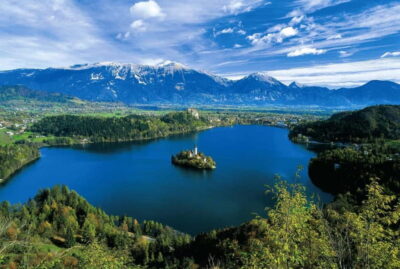
Slovenia in One Day: Lake Bled, Postojna Cave and Predjama Castle
Read our review →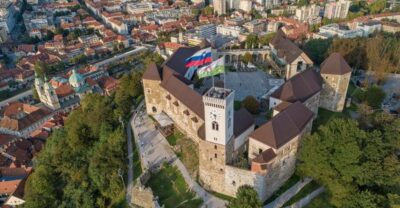
Ljubljana: Castle Entry Ticket with Optional Funicular Ride
Read our review →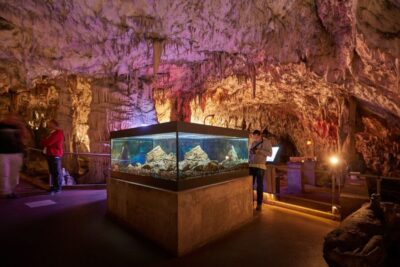
Lake Bled and Bohinj Tour with Savica Waterfall
Read our review →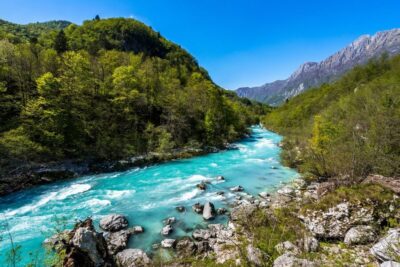
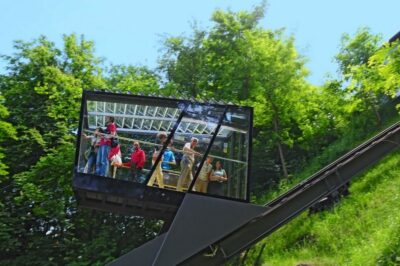
Guided Walk & Funicular Ride to Ljubljana Castle
Read our review →Browse the lists this tour appears in